

Introduction
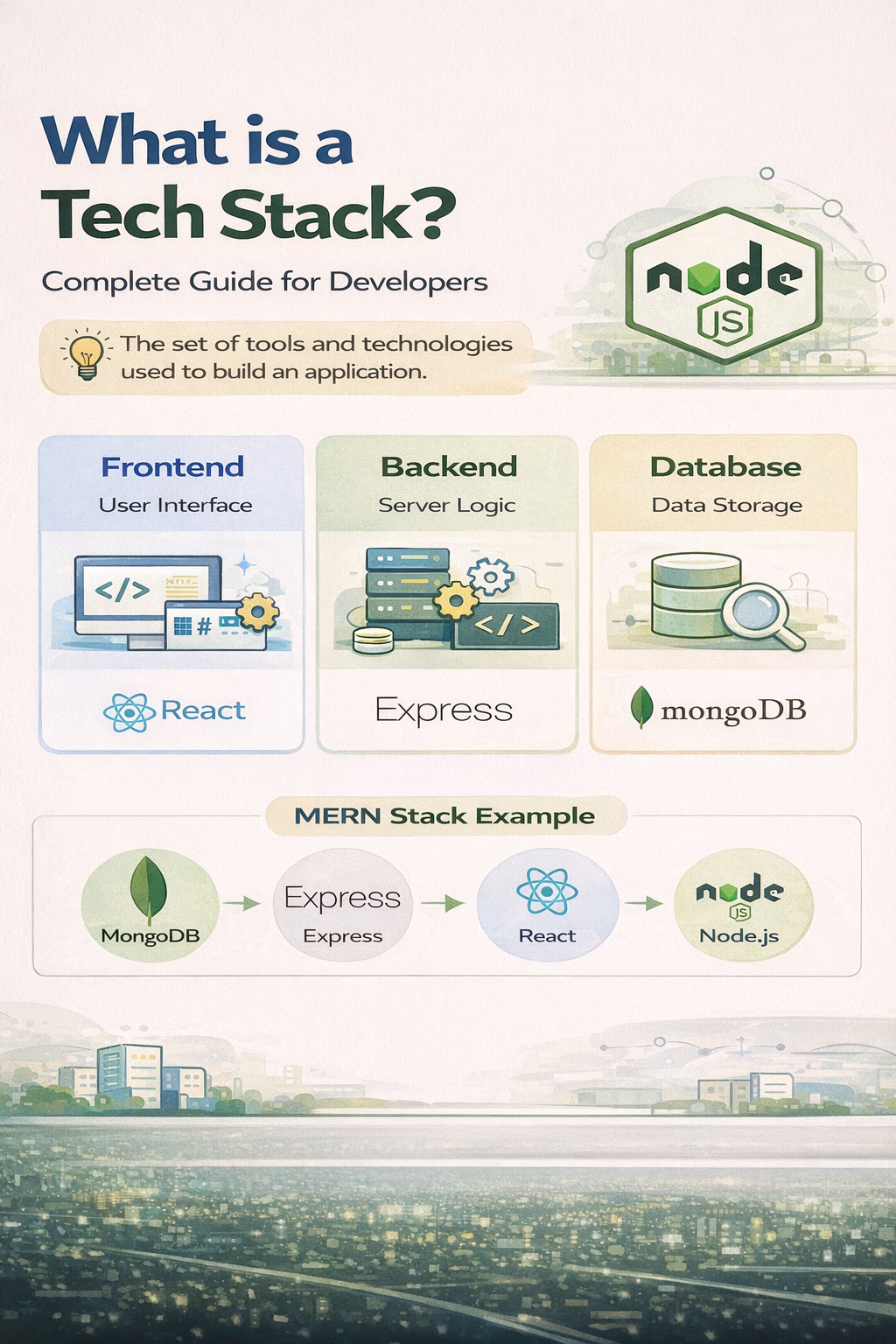
A tech stack is a combination of technologies used to build and run a software application. It includes frontend, backend, and database technologies that work together to create a complete system.
Understanding tech stacks is important for developers because it helps in choosing the right tools for building efficient and scalable applications.
What is a Tech Stack?
A tech stack refers to the set of programming languages, frameworks, libraries, and tools used in software development.
It is mainly divided into two parts:
- Frontend (Client-side)
- Backend (Server-side)
Along with this, a database is used to store and manage data.
Components of a Tech Stack
1. Frontend (Client-Side)
The frontend is what users see and interact with.
Technologies used:
- HTML
- CSS
- JavaScript
- Frameworks like React, Angular, Vue
Responsibilities:
- User interface (UI)
- User experience (UX)
- Handling user interactions
2. Backend (Server-Side)
The backend handles the logic and processes behind the application.
Technologies used:
- Node.js
- Python (Django)
- Java (Spring Boot)
Responsibilities:
- Business logic
- API creation
- Authentication
- Server management
3. Database
The database stores application data.
Types:
- SQL (MySQL, PostgreSQL)
- NoSQL (MongoDB)
Responsibilities:
- Data storage
- Data retrieval
- Data management
How Tech Stack Works Together
- User interacts with frontend
- Frontend sends request to backend
- Backend processes request
- Backend interacts with database
- Response is sent back to frontend
This flow creates a complete working application.
Popular Tech Stack Example: MERN Stack
MERN stands for:
- MongoDB (Database)
- Express.js (Backend framework)
- React (Frontend library)
- Node.js (Runtime environment)
Why MERN Stack is Popular:
- Uses JavaScript everywhere
- Easy to learn and use
- High demand in industry
- Suitable for full-stack development
Other Popular Tech Stacks
1. MEAN Stack
- MongoDB
- Express.js
- Angular
- Node.js
2. LAMP Stack
- Linux
- Apache
- MySQL
- PHP
3. JAMstack
- JavaScript
- APIs
- Markup
Why Tech Stack Matters
- Helps choose the right tools
- Improves development efficiency
- Ensures scalability
- Affects performance and security
Choosing the Right Tech Stack
Consider these factors:
- Project requirements
- Scalability needs
- Developer expertise
- Budget
- Time to market
Advantages of Learning Tech Stacks
- Better understanding of full-stack development
- Increased job opportunities
- Ability to build complete applications
Conclusion
A tech stack is the foundation of any software application. By understanding frontend, backend, and database technologies, you can build complete and scalable applications.
Start learning tech stacks with Mango Engineers and become a job-ready developer.