

Introduction
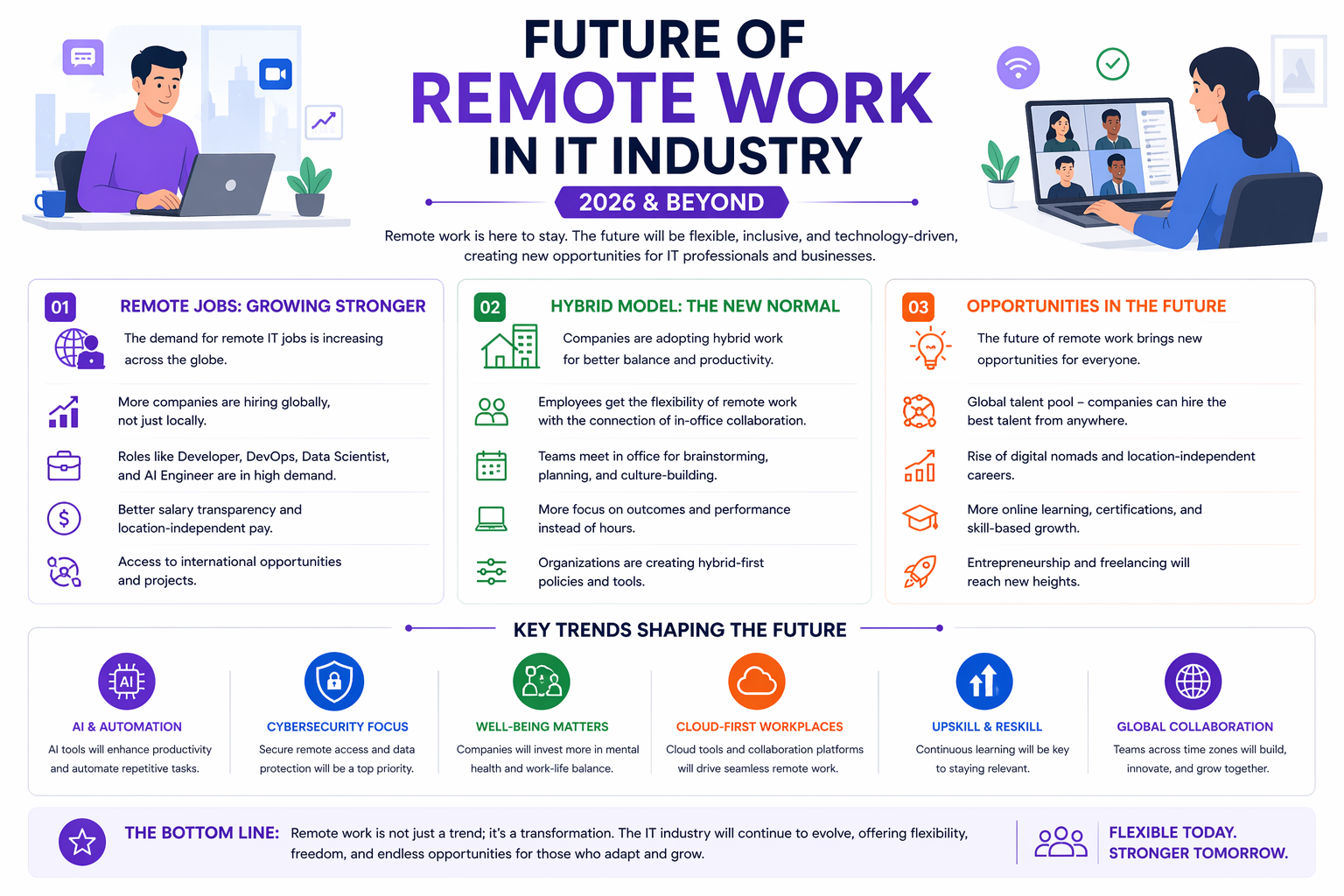
Remote work has transformed the IT industry over the past few years. In 2026 and beyond, it is no longer a trend but a standard way of working for many companies.
In this guide, you will understand the future of remote work, including remote jobs, hybrid models, and career opportunities.
Why Remote Work is Growing
- High demand for flexibility
- Global hiring opportunities
- Cost savings for companies
Remote work allows companies to hire talent from anywhere in the world.
1. Rise of Remote Jobs
Remote jobs are increasing across all IT fields.
Popular Remote Roles:
- Software Developer
- Data Analyst
- UI/UX Designer
- DevOps Engineer
Benefits:
- Work from anywhere
- Better work-life balance
- Access to global companies
2. Hybrid Work Model
Many companies are adopting a hybrid model.
What It Means:
- Combination of remote and office work
- Flexible schedules
Why Companies Prefer It:
- Better team collaboration
- Employee flexibility
3. Global Opportunities
Remote work has opened global opportunities.
Impact:
- Work with international clients
- Earn higher salaries
- Exposure to global projects
4. Skills Required for Remote Jobs
Technical Skills:
- Programming
- Tools and technologies
Soft Skills:
- Communication
- Time management
- Self-discipline
5. Challenges of Remote Work
- Lack of direct communication
- Time zone differences
- Self-discipline issues
Solution:
- Use collaboration tools
- Maintain routine
6. Future Trends in Remote Work
- Increase in remote-first companies
- Growth of freelance and contract work
- More digital collaboration tools
Key Takeaways
- Remote work is becoming standard in IT
- Hybrid model is widely adopted
- Global opportunities are increasing
- Soft skills are as important as technical skills
Conclusion
The future of remote work in IT is bright and full of opportunities. Developers who adapt to remote work culture and build strong skills will succeed in this evolving environment.
Start learning with Mango Engineers and prepare for global remote opportunities.