

Introduction
Freelancing is one of the fastest-growing career options in 2026. Many developers and designers work independently with clients across the world.
But how do freelancers actually handle real client projects from start to finish?
In this guide, you will learn the complete step-by-step process used by successful freelancers.
Overview of Freelancing Workflow
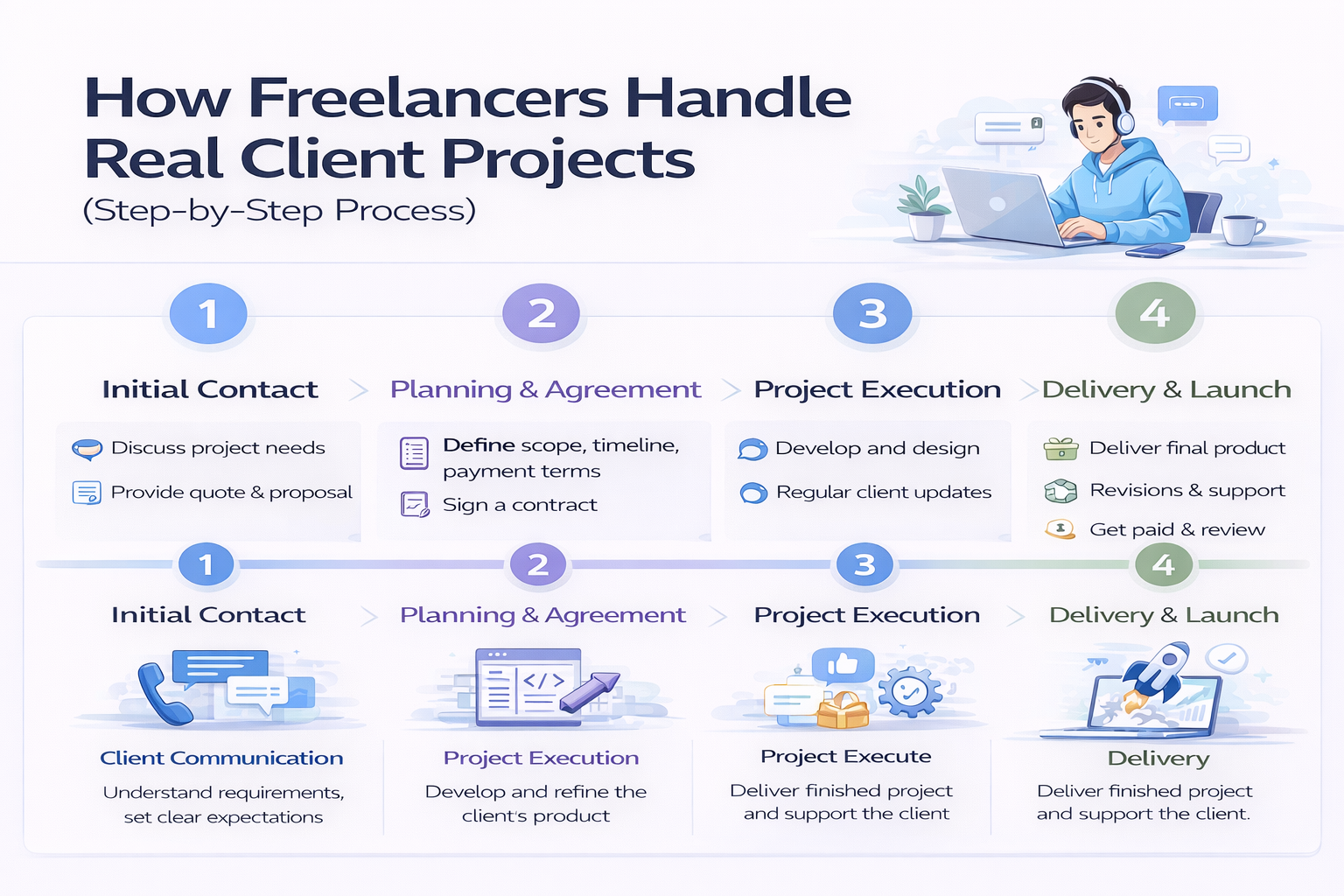
A typical freelance project goes through these stages:
- Client communication
- Requirement gathering
- Planning and proposal
- Project execution
- Delivery and feedback
Step 1: Client Communication
This is the first and most important step.
What freelancers do:
- Understand client needs
- Ask questions
- Discuss budget and timeline
Tips:
- Be clear and professional
- Confirm requirements in writing
Step 2: Requirement Gathering
Freelancers collect detailed project requirements.
Includes:
- Features needed
- Design expectations
- Technical requirements
Output:
- Project scope document
Step 3: Proposal & Planning
Freelancers create a plan before starting.
Includes:
- Timeline
- Milestones
- Cost estimation
Example:
- 1 week for design
- 2 weeks for development
Step 4: Project Execution
This is where actual work happens.
Activities:
- Designing (UI/UX)
- Development (frontend/backend)
- Regular updates to client
Best Practice:
- Share progress regularly
- Use tools like Git, Trello, or Slack
Step 5: Testing & Revisions
Before final delivery, freelancers test the project.
Includes:
- Bug fixing
- Performance checks
- Client feedback implementation
Step 6: Delivery
Final project is delivered to the client.
Includes:
- Source code
- Documentation
- Deployment (if required)
Step 7: Payment & Support
After delivery:
- Client releases payment
- Freelancer may provide support or maintenance
Real Example Workflow
- Client contacts freelancer
- Requirements discussed
- Proposal approved
- Project started
- Regular updates shared
- Final delivery
- Payment completed
Tools Freelancers Use
- Communication: Zoom, Email
- Project Management: Trello, Asana
- Development: VS Code, GitHub
Common Mistakes to Avoid
- Not clarifying requirements
- Poor communication
- Missing deadlines
- Not testing properly
Tips for Beginners
- Start with small projects
- Build portfolio
- Communicate clearly
- Deliver on time
Conclusion
Freelancing requires both technical skills and communication skills. By following a structured process, you can successfully handle client projects.
Start learning with Mango Engineers and build your freelancing career.