


Introduction
With the rise of digital education, many students are confused between online learning and offline training. Both methods have their own advantages and limitations.
In this guide, we will compare online and offline training to help you choose the best option in 2026.
What is Online Learning?
Online learning allows you to study from anywhere using the internet.
Features:
- Learn from home
- Recorded or live classes
- Self-paced learning
What is Offline Training?
Offline training involves physical classroom learning.
Features:
- Face-to-face interaction
- Fixed schedule
- Classroom environment
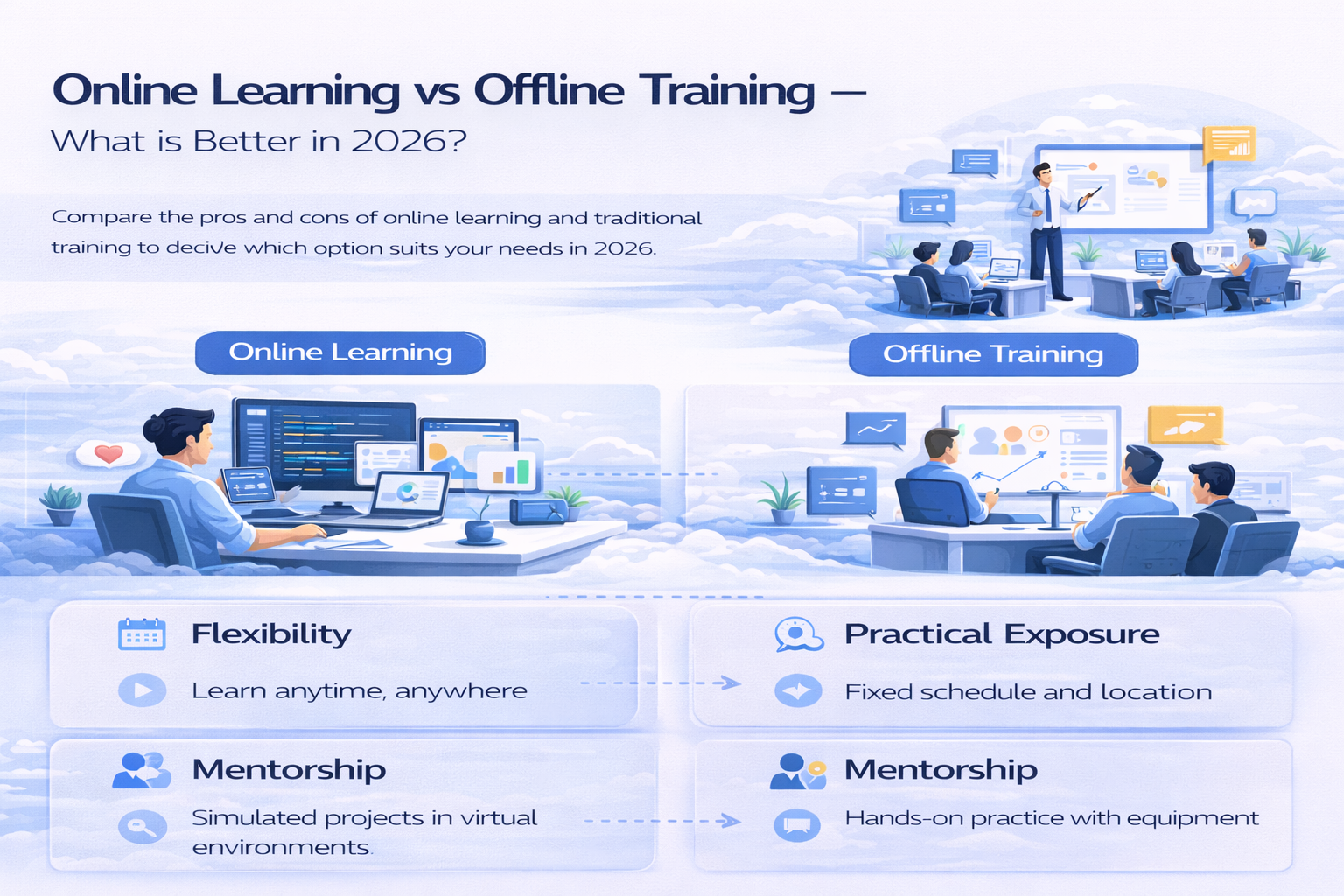
Online vs Offline Training Comparison
1. Flexibility
Online Learning:
- Learn anytime, anywhere
- Flexible schedule
Offline Training:
- Fixed timings
- Less flexibility
2. Practical Exposure
Online Learning:
- Depends on course quality
- Limited hands-on guidance
Offline Training:
- Better practical sessions
- Direct support from trainers
3. Mentorship
Online Learning:
- Limited interaction
- Doubt-solving may be delayed
Offline Training:
- Direct mentorship
- Immediate feedback
4. Discipline & Focus
Online Learning:
- Requires self-discipline
- Easy to get distracted
Offline Training:
- Structured environment
- Better focus
5. Cost
Online Learning:
- Generally cheaper
Offline Training:
- Slightly expensive due to infrastructure
Which One Should You Choose?
Choose Online Learning if:
- You want flexibility
- You are self-disciplined
- You prefer learning at your own pace
Choose Offline Training if:
- You need mentorship
- You want practical exposure
- You prefer classroom learning
Best Approach in 2026
The best approach is a hybrid model:
- Learn basics online
- Practice and projects offline
Conclusion
Both online and offline learning have their advantages. The best choice depends on your learning style, goals, and discipline.
Choose wisely and focus on building real skills.
Start learning with Mango Engineers and build your career with the right guidance.