

Introduction
Competitive programming is a great way to improve your coding skills, problem-solving ability, and logical thinking. It also helps in preparing for coding interviews and gaining recognition in the developer community.
If you are a beginner, this roadmap will help you start your journey step by step.
What is Competitive Programming?
Competitive programming is a sport where programmers solve coding problems within a limited time during contests.
It focuses on:
- Speed
- Accuracy
- Problem-solving skills
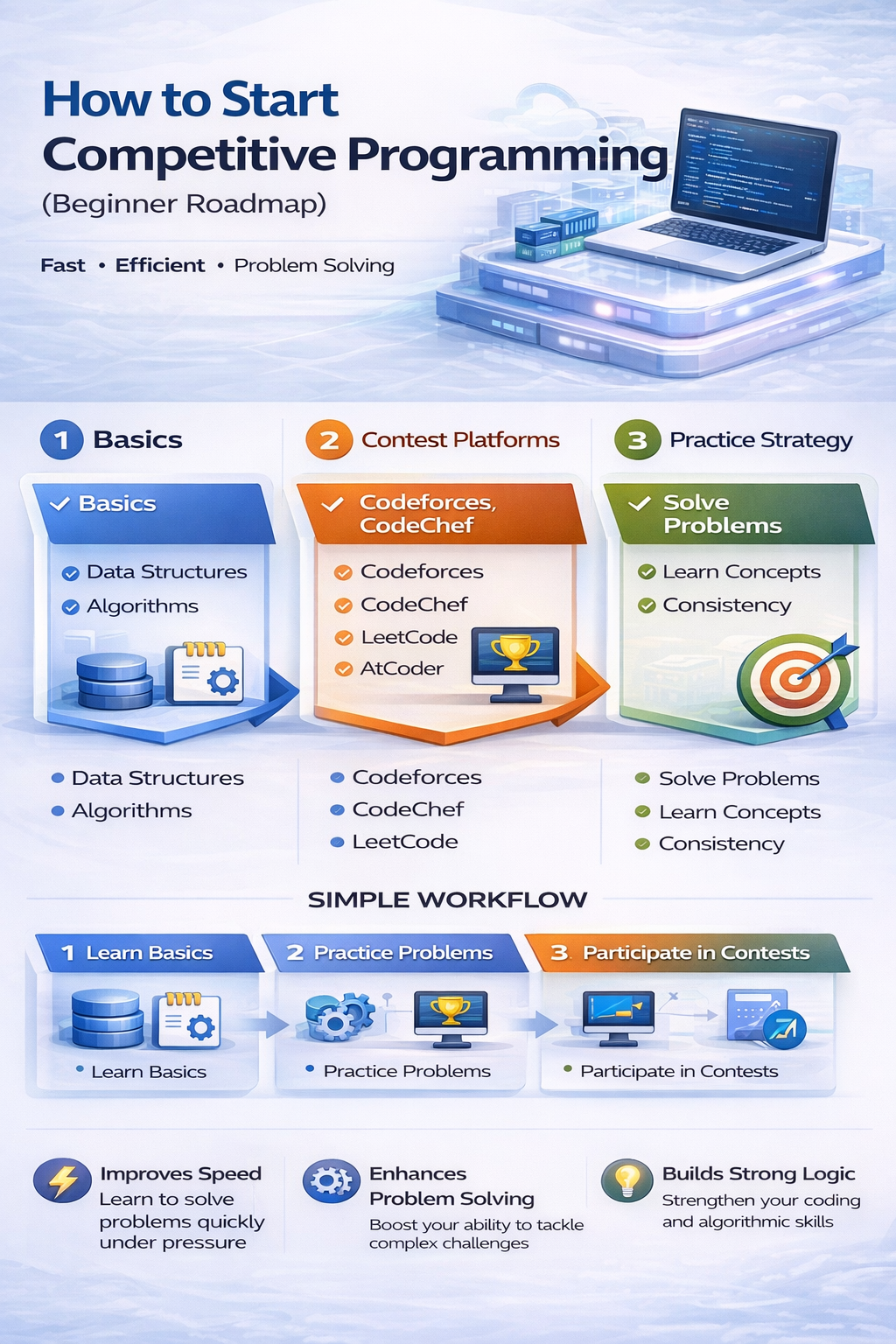
Step 1: Learn the Basics
Before starting competitive programming, you should know:
- Basic programming (C, C++, Java, or Python)
- Loops and conditions
- Functions
- Basic data structures (arrays, strings)
Step 2: Choose a Programming Language
Pick one language and stick with it.
Popular choices:
- C++ (fast and widely used)
- Python (easy for beginners)
Step 3: Learn Data Structures & Algorithms (DSA)
Important topics:
- Arrays & Strings
- Stack & Queue
- Recursion
- Sorting & Searching
Step 4: Start Practicing Problems
Begin with easy problems and gradually increase difficulty.
Focus on:
- Logic building
- Understanding patterns
- Writing clean code
Step 5: Use Contest Platforms
Practice and compete on platforms like:
- CodeChef
- Codeforces
- LeetCode
These platforms host regular contests and challenges.
Step 6: Participate in Contests
- Start with beginner contests
- Don’t worry about ranking initially
- Focus on learning
Step 7: Analyze Your Solutions
After solving problems:
- Check optimal solutions
- Learn new approaches
- Improve your logic
Practice Strategy for Beginners
Daily Plan:
- Solve 2–3 problems
- Revise concepts
- Learn one new topic
Weekly Plan:
- Participate in 1–2 contests
- Review mistakes
Common Mistakes to Avoid
- Jumping to hard problems too early
- Not revising concepts
- Ignoring time complexity
- Comparing with others
Tips to Improve Faster
- Be consistent
- Focus on problem-solving, not just coding
- Learn from editorials
- Track your progress
Benefits of Competitive Programming
- Improves problem-solving skills
- Helps in coding interviews
- Builds confidence
- Opens job opportunities
Conclusion
Competitive programming is a powerful way to become a better programmer. Start with basics, practice regularly, and participate in contests.
Learn with Mango Engineers and build strong coding skills step by step.