

Your resume is the first impression you make on recruiters. A strong, well-structured resume can significantly increase your chances of getting shortlisted for interviews.
In this guide, you’ll learn how to create a powerful software developer resume, what to include, and common mistakes to avoid.
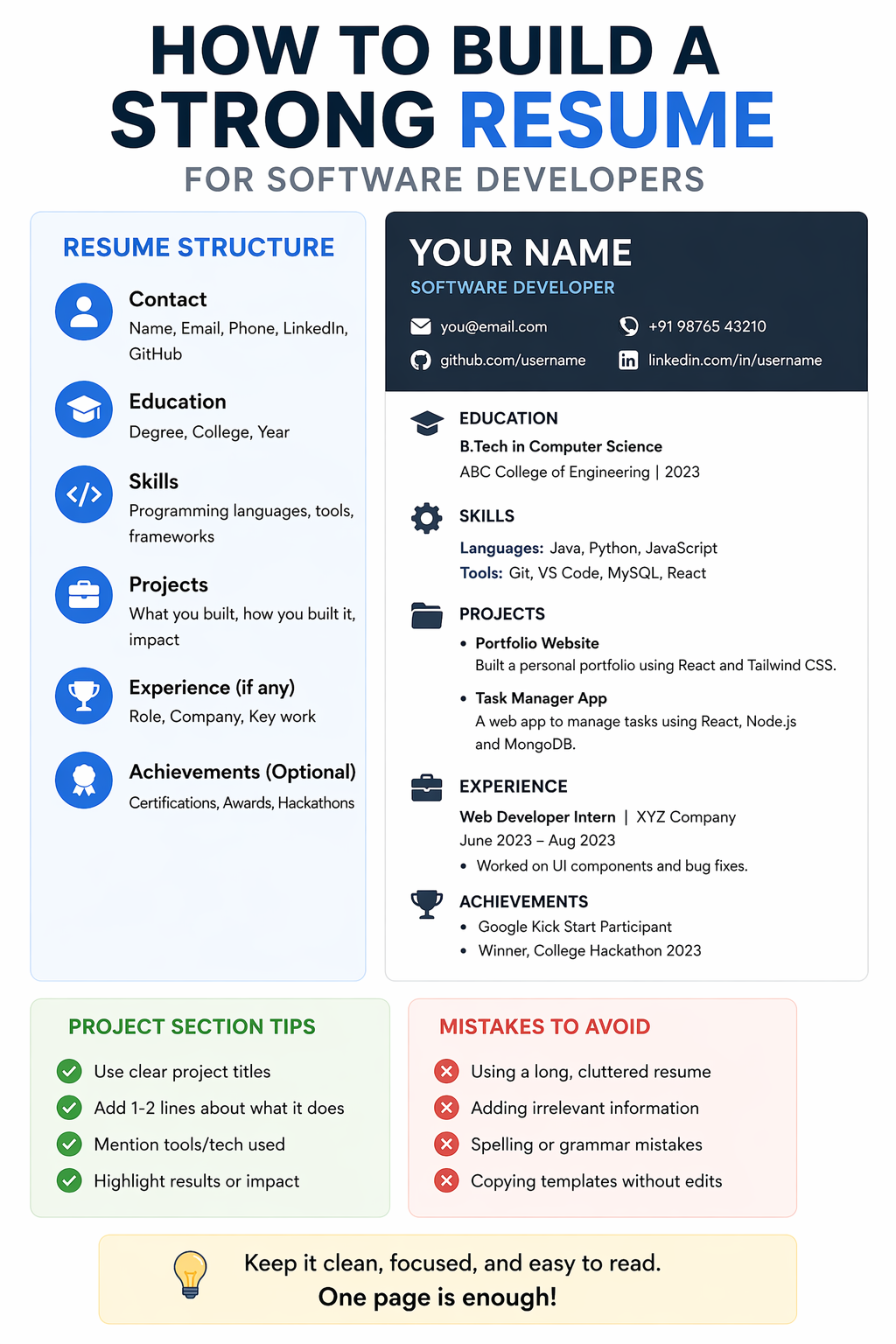
1. Resume Structure (Perfect Format)
A clean and professional structure makes your resume easy to read.
Recommended Structure:
- Name & Contact Information
- Professional Summary (2–3 lines)
- Skills (Technical + Tools)
- Projects (Most Important Section)
- Education
- Certifications (Optional)
- Links (GitHub, Portfolio, LinkedIn)
👉 Keep your resume limited to 1 page (for freshers).
2. Professional Summary
Write a short summary that highlights your skills and goals.
Example:
Motivated software developer with strong knowledge of JavaScript and backend development. Experienced in building real-world projects and eager to contribute to innovative tech solutions.
👉 Keep it concise and impactful.
3. Skills Section
Mention only relevant and practical skills.
Example Skills:
- Languages: JavaScript, Python
- Frontend: HTML, CSS, React
- Backend: Node.js, APIs
- Tools: Git, GitHub
👉 Avoid adding too many unnecessary skills.
4. Project Section (Most Important)
This is the section recruiters focus on the most.
How to Write Projects:
- Project Title
- Short description
- Technologies used
- Key features
- Live link + GitHub link
Example:
E-commerce Website
- Built a full-stack e-commerce platform using React and Node.js
- Implemented user authentication and payment integration
- Deployed on live server
👉 Add 2–4 strong projects instead of many weak ones.
5. Education Section
Include your degree, college name, and passing year.
👉 Avoid unnecessary details like school-level marks unless required.
6. Common Mistakes to Avoid
- ❌ Using long and messy format
- ❌ Adding irrelevant skills
- ❌ No project links
- ❌ Spelling and grammar mistakes
- ❌ Copy-paste resume templates without customization
👉 Always proofread your resume before sending.
7. Pro Tips for Shortlisting
- Customize resume for each job
- Use action words (Built, Developed, Designed)
- Keep formatting clean and simple
- Highlight achievements, not just responsibilities
Final Thoughts
A strong resume is not about writing everything — it’s about presenting the right information in the right way.
Focus on real projects, relevant skills, and clear presentation to stand out from other candidates.
Call to Action
If you want help building a professional resume, real-world projects, and interview preparation, join our programs and get job-ready faster.