

Introduction
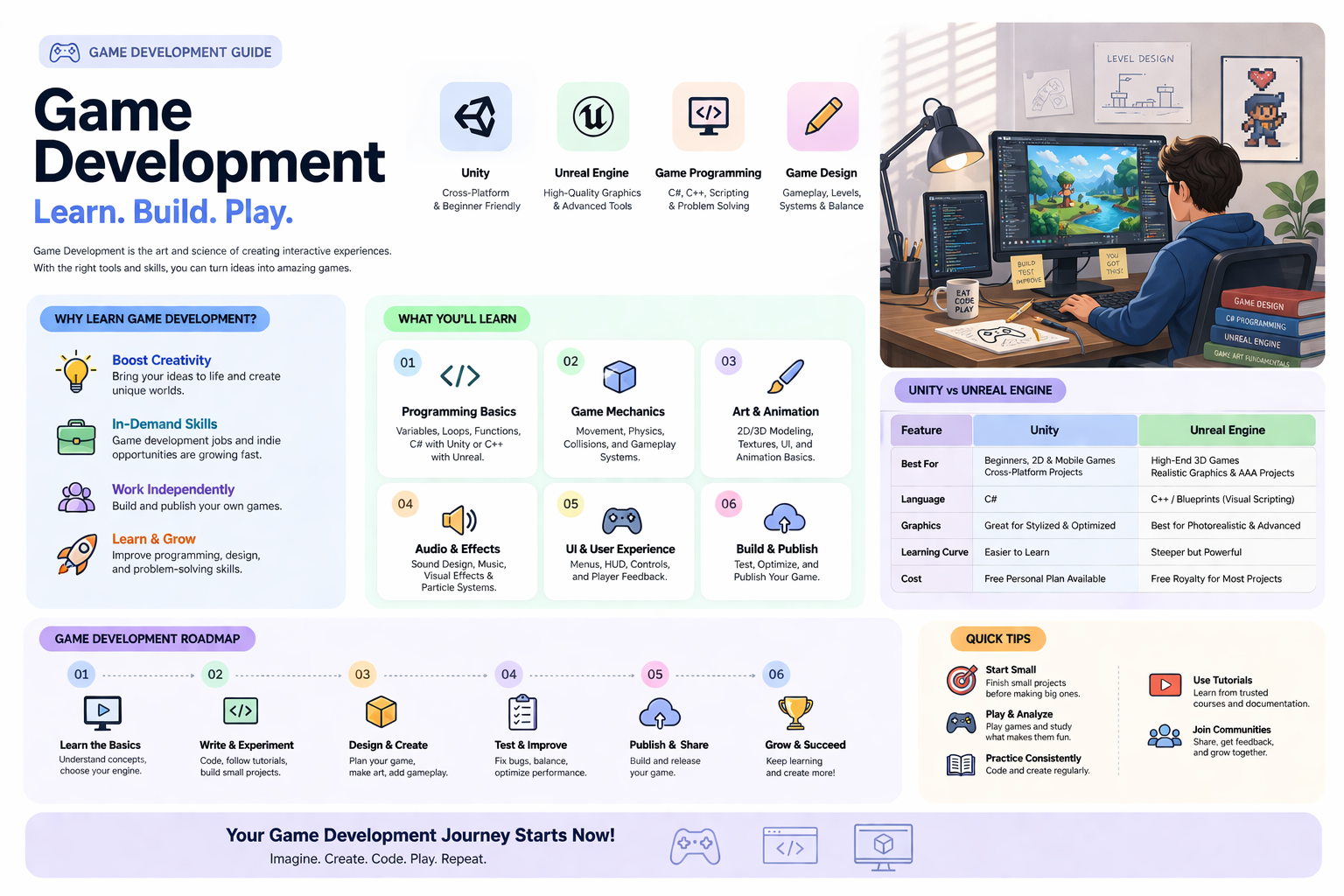
Game development is an exciting and creative field in 2026. From mobile games to AAA titles, developers use powerful tools and programming skills to build immersive experiences.
This roadmap will guide you step by step from beginner to professional game developer.
What is Game Development?
Game development involves designing, developing, and publishing video games.
It includes:
- Game design
- Programming
- Graphics and animation
Step 1: Learn Programming Basics
Before building games, learn:
- Variables and data types
- Loops and conditions
- Functions
Languages:
- C# (for Unity)
- C++ (for Unreal Engine)
Step 2: Learn Game Engines
Game engines help you build games efficiently.
Popular Engines:
- Unity
- Unreal Engine
What to Learn:
- Game objects
- Physics
- Animation
- Scene management
Step 3: Learn Game Design
Game design focuses on how a game works.
Key Concepts:
- Game mechanics
- Level design
- User experience
- Storytelling
Step 4: Work on Projects
Start building small games:
- 2D platformer
- Puzzle game
- Simple shooting game
Step 5: Learn Advanced Concepts
- AI in games
- Multiplayer systems
- Optimization
Tools & Technologies
- Unity
- Unreal Engine
- Blender (3D modeling)
- Photoshop (design assets)
Step-by-Step Timeline
Month 1–2:
- Learn programming basics
Month 3–4:
- Learn Unity or Unreal
Month 5–6:
- Build small games
Month 7–8:
- Learn advanced concepts and projects
Real Project Ideas
- Endless runner game
- Shooting game
- Multiplayer mini-game
Tips for Beginners
- Start with simple games
- Focus on fundamentals
- Practice regularly
- Build portfolio
Conclusion
Game development is a rewarding career for creative individuals. By following this roadmap, you can build skills step by step and become a professional game developer.
Start learning with Mango Engineers and create your own games.