Practical technology learning
Generative AI Practice: Design the Smallest Useful Input
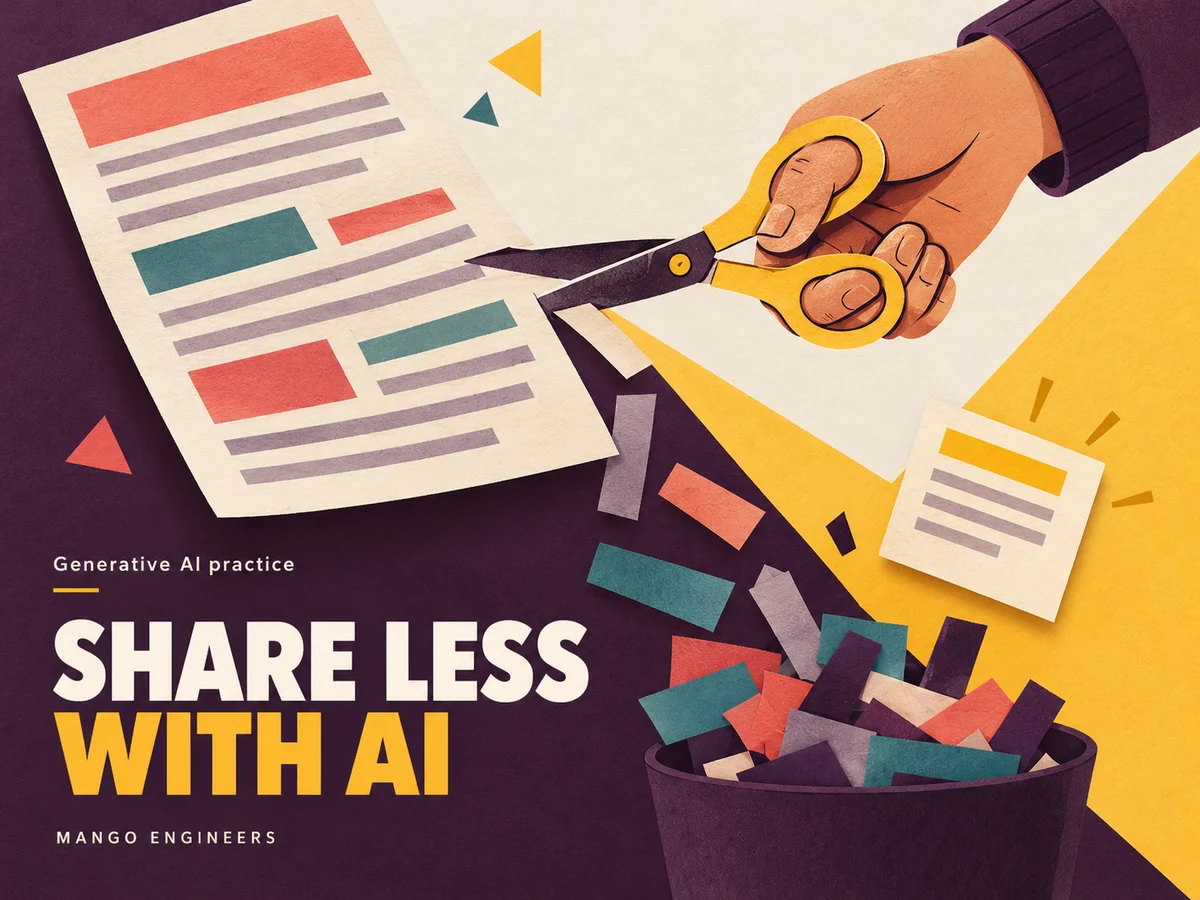
A prompt does not need every detail in a source document to produce a useful draft. Designing the smallest useful input is a practical habit for generative AI learning, especially when an example could otherwise copy personal or confidential information.
Use a fictional scenario from the start
Write a made-up task note about a small software project: a dashboard needs a filter, a mock dataset is available and a review is pending. Add clearly fictional, unnecessary fields such as a pretend contact label and an internal-looking project code. Do not copy a real message and attempt to clean it after the fact.
This is a proposed responsible-use exercise alongside Generative AI training in Jaipur. It does not require publishing a real customer record or choosing a new account or service.
Define the output before selecting the input
Ask for three neutral next-step bullets. List the facts needed for that output: the feature, the available practice data and the unresolved review. A contact identity, private access link and unrelated conversation history are unnecessary for this task. Remove them from the practice prompt entirely.
Compare two fictional versions
Keep one full fictional note and one reduced version. If an approved AI environment is available, run the same output request against each. Otherwise review the two prompts offline. Check whether the reduced version retains the necessary task facts and whether any invented detail appears in the response.
Evaluate usefulness with a small rubric: correct feature, correct dependency, no added names and no invented completion date. The aim is sufficient context, not the shortest possible sentence.
Do not confuse replacement with anonymity
Changing a name to Person A can still leave identifying context in a real record. Combinations of dates, roles, events or rare details may reveal more than the obvious name field. A synthetic exercise avoids making an unsupported claim that a real document has become anonymous.
For actual work, follow the organisation's approved tool, access and data-handling rules. Retention settings, model behaviour and permission to process a document are separate questions that a redacted-looking prompt cannot settle.
Save a reusable input checklist
- What exact output is needed?
- Which facts are necessary for that output?
- Can fictional or aggregate information satisfy the practice task?
- What remains unnecessary even after obvious names are removed?
- Who owns approval for any real data used later?
Keep a measured conclusion
Record what you removed and whether the intended output remained useful. Do not label the method as guaranteed privacy or a complete security review. Mango Engineers' Generative AI learning path is the related course context for prompt design, responsible use and evaluation; confirm current coverage and prerequisites with the team.